
● Royal Victoria Institute · Est. 1892
Discover our past.
Understand our present.
Inspire our future.
A virtual tour concept for the National Museum & Art Gallery of Trinidad and Tobago — seven galleries and 130 years of the Royal Victoria Institute, walkable from anywhere in the world.
About the museum
Preserving our story, building our community.
Opened in 1892 as the Royal Victoria Institute, the museum has spent more than a century collecting, conserving and presenting Trinidad and Tobago’s human and natural heritage — from the nation’s earliest settlers to its Carnival arts and petroleum economy.
We are dedicated to the pillars of museum practice — research, collection, conservation, interpretation and exhibition — to educate, inspire and strengthen our community.
Learn more about the galleries →A journey through time
Explore · Seven galleries
One collection, seven stories.
Select a gallery to see what it holds. Photography below is real and correctly matched to each subject — see the notice further down the page for exactly what that means.
Featured holdings
Real photography, correctly matched.
Filter by gallery. Paintings shown are genuinely by Cazabon and genuinely described as held by the museum; other photographs are real, accurately captioned reference images — not photographs of the specific object on the museum’s shelf.
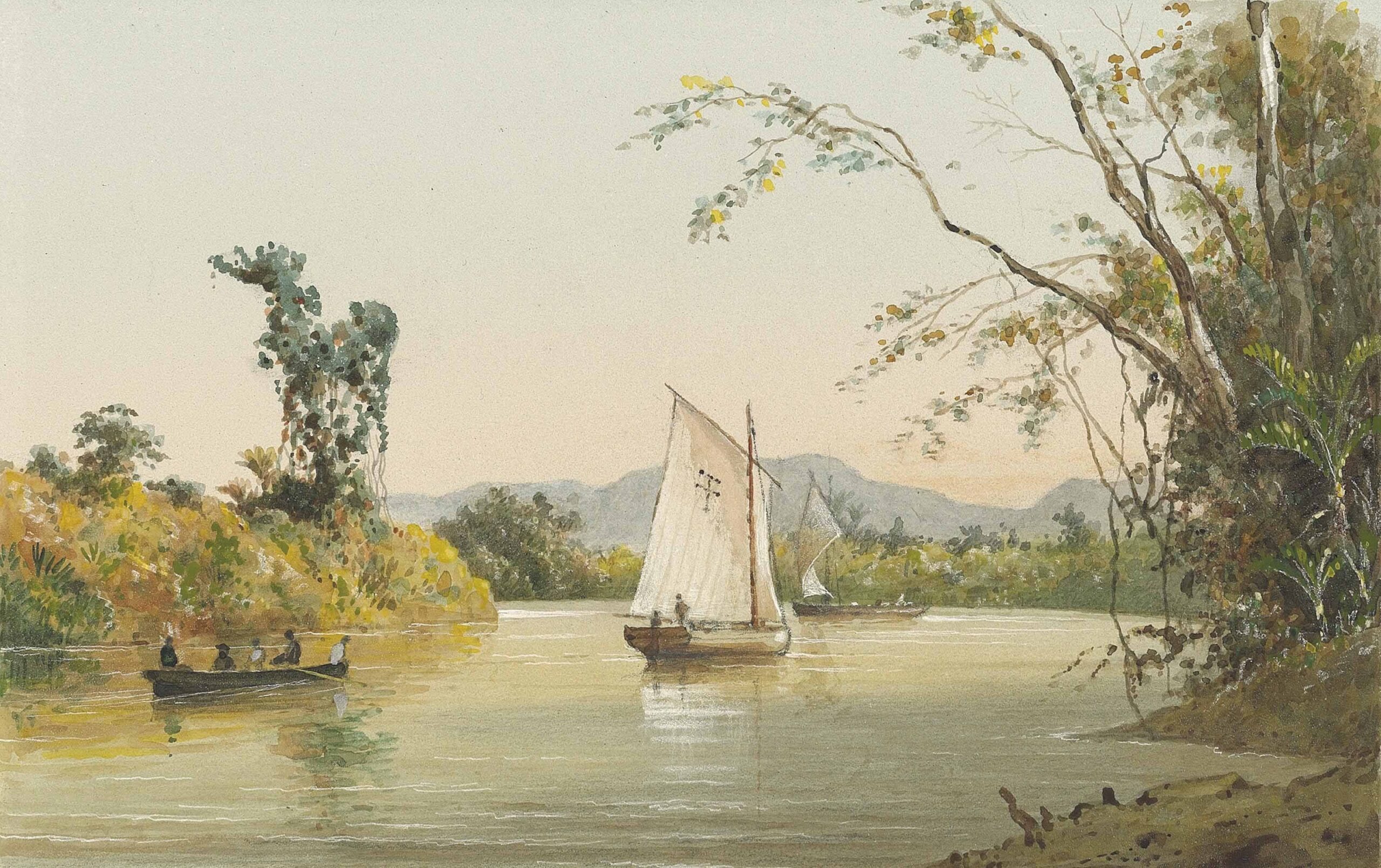 On the Caroni, Trinidad · Michel-Jean Cazabon
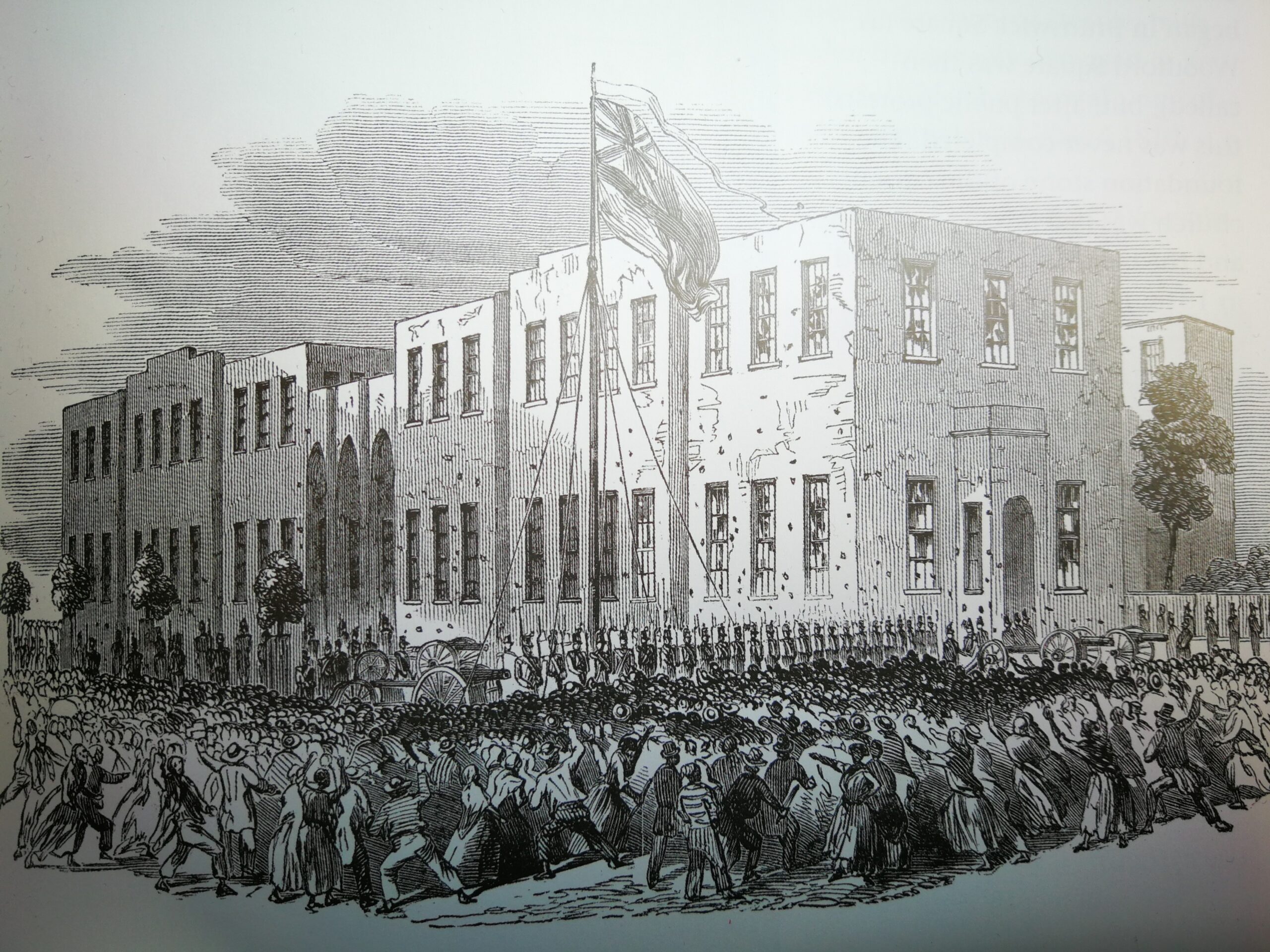 The Red House, Port of Spain, 1849 · Michel-Jean Cazabon
Featured artist
Michel-Jean Cazabon
1813 – 1888 · Naparima, Trinidad
Trinidad’s first internationally known painter. Cazabon trained in Paris under Paul Delaroche — having been sent to study medicine and quietly switched to fine art — then returned home and spent his career painting the island: the Caroni river, the Port of Spain docks, the estate houses and bamboo arches of the northern valleys.
Photography did not reach Trinidad in any quantity until after his death. Cazabon’s watercolours are, for much of the nineteenth century, the closest thing the country has to a photographic record of itself.
The museum holds a dedicated Cazabon gallery. Other works sit in private collections across Trinidad and abroad, and in the Louvre.
Cazabon on Google Arts & Culture ↗The building
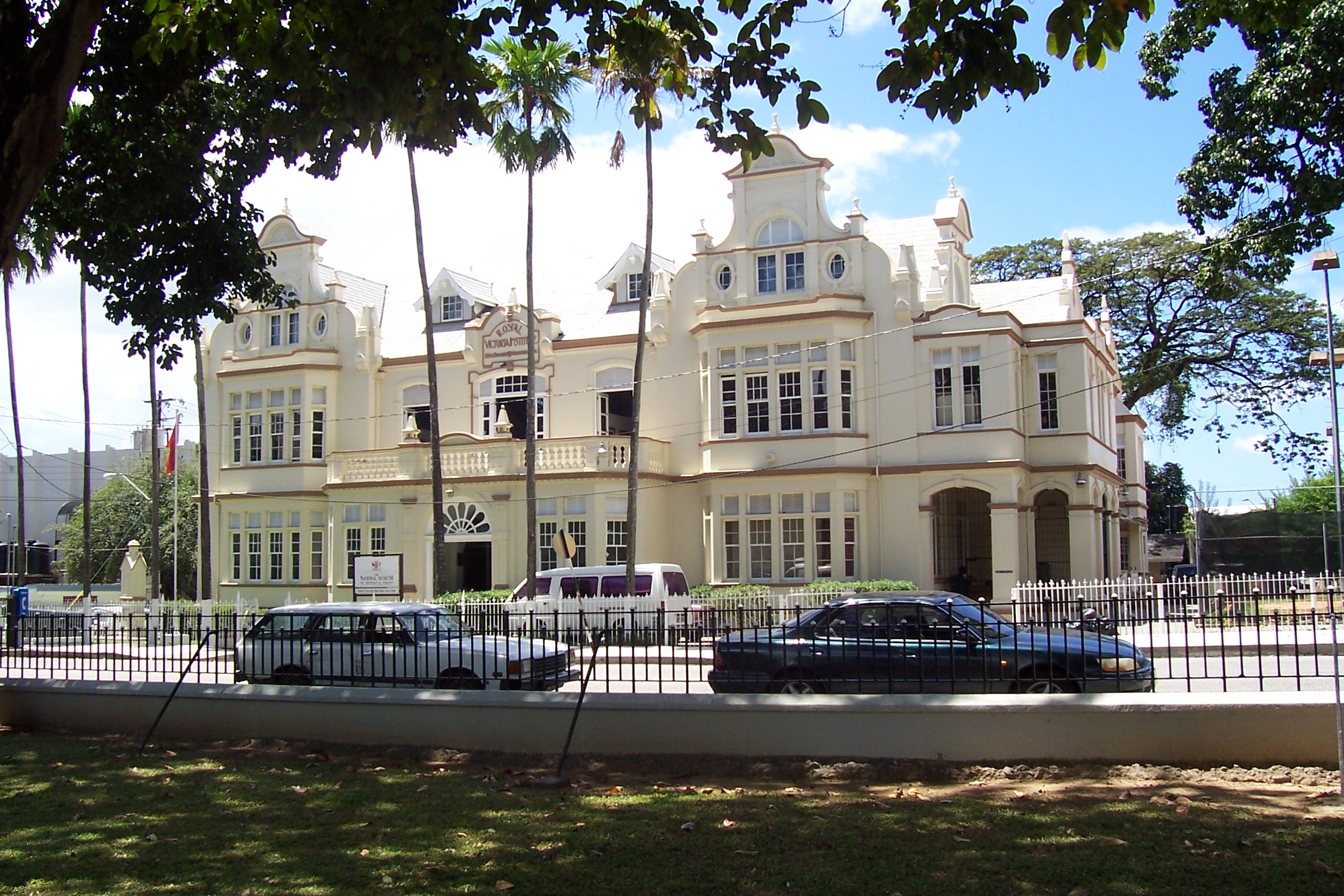
A German Renaissance hall at the top of Frederick Street.
Designed by Daniel Meinerts Hahn, Chief Draughtsman of the Public Works Department — Dutch gables and a slate roof, built for the tropics and named for a queen’s jubilee.
The Royal Victoria Institute opens
Opened on 17 September and named to mark Queen Victoria’s jubilee, the Institute is conceived as a combined museum, art gallery and technical school — a single civic building for the industrial and cultural instruction of the colony.
Fire
The building is gutted. Much of the original holding is lost — the reason a museum founded in 1892 dates so much of its surviving collection to the decades after.
Rebuilt on the same ground
Reconstruction restores the Institute to Frederick Street, opposite Memorial Park and just south of the Queen’s Park Savannah, where it has stood ever since.
The National Museum and Art Gallery
Three years after independence, the Royal Victoria Institute is renamed. The collection is re-framed around a national story rather than an imperial one.
Closed for renovation
The main building is currently closed to the public for restoration works — which is precisely the argument for a virtual tour. A digital floor keeps the collection open while the physical one is shut, and stays open to schools, the diaspora and researchers long after the scaffolding comes down.
Royal Victoria Institute — National Trust of Trinidad & Tobago ↗
Arrive
Step outside the building before you step in.
The tour begins on the pavement. Pan the map, drop into Street View, and approach the façade the way a visitor walking up Frederick Street would.
Address
117 Frederick Street
Port of Spain, Trinidad & Tobago
Opening hours
Tuesday – Saturday, 10:00 – 18:00
Closed Sun & Mon
Admission
Free
Telephone
Getting there
At the top of Frederick Street, facing Memorial Park and a short walk south of the Queen’s Park Savannah.
Branch museums
Read this first
This is a concept demo, not a museum publication.
Built by Tweller Studios to show the National Museum & Art Gallery what a virtual tour of their collection could be. The framework is real and working; the museum has not reviewed or approved this page.
- The history is real. Dates, architecture, gallery themes, Cazabon, the Angostura puncheon, the branch museums and the visitor details are drawn from published sources.
- The photography is real, but not all of it is the specific object. The building photo, both Cazabon paintings, and the museum’s emblem are the genuine article, sourced from Wikimedia Commons and the museum’s public Facebook page. The Pitch Lake, Angostura bottle, scarlet ibis, ocelot, steelband and Carnival photographs are real, correctly matched reference photography — not photographs of the individual pieces the museum holds.
- The First Peoples image is representative. It shows a Caribbean zemi figure of the general period and region, not a piece from NMAG’s own archaeology collection.
- In production, every photograph would be the museum’s own — the actual objects, on the actual shelf, shot on site.

